Exhibition Content:
TABOSAN empties a whole jar of hot pepper into his mouth. Every time I see it, I laugh out loud.
TABOSAN swears, has tears in his eyes. Maybe, it’s hard even for TABOSAN, but he does it to maybe just entertain me.
One day, I had trouble contacting TABOSAN. I worried about him because I knew his status.
I first met TABOSAN two years ago. One of my friends from Myanmar, Zou, introduced him to me. “TABOSAN-san,” Zou said it and then laughed a little bit.
TABOSAN is a refugee. To be precise, he is in the process of applying for refugee status. That is not a big deal between me and TABOSAN. I just want us to be together.
TABOSAN spent 8 months at an immigration detention center for those applying for political asylum before we met. We visited the homes of TABOSAN’s friends from the center. In Kanagawa, Yamanashi, Tochigi and Gunma. Everyone is under temporary release, on bail, called provisional release status. There are quite a lot of people who have applied for refugee status for years. And nobody knows when they will be put back in the immigration center again.
TABOSAN walked into the glass-divided room.
I asked him “Did you call your home in Sri Lanka?”
“Yes,” TABOSAN answered.
He also said, “But, I didn’t tell them I was in an immigration center. So nothing is different from ordinary days.”
He said that because he thought his mother would worry about him if she knew about it.
Every time I went to see him, I gave him photos of himself. He slowly looked at them, then smiled. “Thank you” he said to me.
In the meantime, I received his letters from the detention center. His drawing was on one of them. It was a geeky drawing, but entertains me every time I see it.
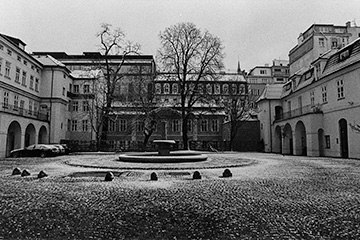
Monochrome: 30 works
Comments:
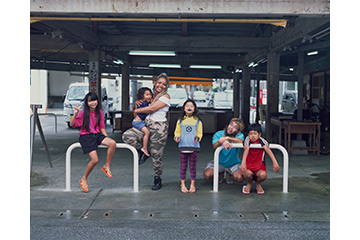
This exhibition is a record of the companionship between Mr. Soeda, a photographer, and TABOSAN who is in the process of applying for refugee status in Japan.
TABOSAN left Myanmar and is now applying to the Japanese government for refugee status, however, as you can see from the exhibition title, he is “not yet a refugee”.
The Japanese immigration office imposes a rigid system, compared with other developed countries and doesn’t accept an application easily.
What the photographer is trying to tell us through his photographs is not the Japanese domestic situation. He has had interactions with TABOSAN since 2008. At random times, TABOSAN is forcibly taken into custody and then released again. Letters to the photographer from the immigration center, TABOSAN released, TABOSAN visiting his friends, sudden re-custody… He has recorded the life around the two of them calmly.
Moreover, this work goes beyond their relationship. The point is where “you” belong in the system these days. What do you want to do? Is it permissible? This exhibition shows the fear of alienation.
We live without thinking about the sphere of the “nation” everyday. Seeing TABOSAN’s back -taken into custody beyond the lattice door- the photographer embodies an abstract “Japanese nation” beyond the detention center.
Is the space where TABOSAN disappeared Japan or not? Is the place where I am gazing after TABOSAN Japan? Where I am standing is where on the earth?
The photographer reaches for the consciousness of self-duality.
We live by belonging to many spheres today. Family, company, local society and country. “Not yet refugees” is a great work that effectively expresses the fears and difficulties caused when someone deviates from such spheres by showing tones of detachment in seemingly ordinary images.
With Japan’s unique issues as a background, the photographer’s message may be that we are all earthlings.
KOHEI SOEDA profile
Born in Tokyo in 1984.
Graduated Nippon Photography Institute evening session in 2008.
Studied under Mr. Kunihiro Suzuki.
Established KUWATA-Planning with Kenta Kuwata in 2009.
Published KUWATA-Planning Magazine in 2009.
Exhibitions
2009: “Seifu show 2009” (Seifu So)
2010: “Seifu show 2010” (The Musashino Cultural Foundation Hall)
and more.